Working Hours : Saturday - Wednesday, 08am - 05pm


Orthodontics
(80)
Biomechanics Course
Focuses on the principles of orthodontic biomechanics, force systems, tooth movement, and appliance mechanics to enable predictable and efficient treatment outcomes.
What You Will Learn
The Biomechanics Course introduces one of the most important scientific pillars of orthodontics: understanding how forces, moments, and mechanical systems influence tooth movement and treatment control.
This course helps trainees move beyond simply using orthodontic appliances toward understanding how they actually work, why they produce different outcomes, and how biomechanics shapes clinical success.
During this course, you will learn how to:
- Understand the core principles and clinical relevance of orthodontic biomechanics
- Explore how orthodontic forces are generated and transmitted to teeth and supporting tissues
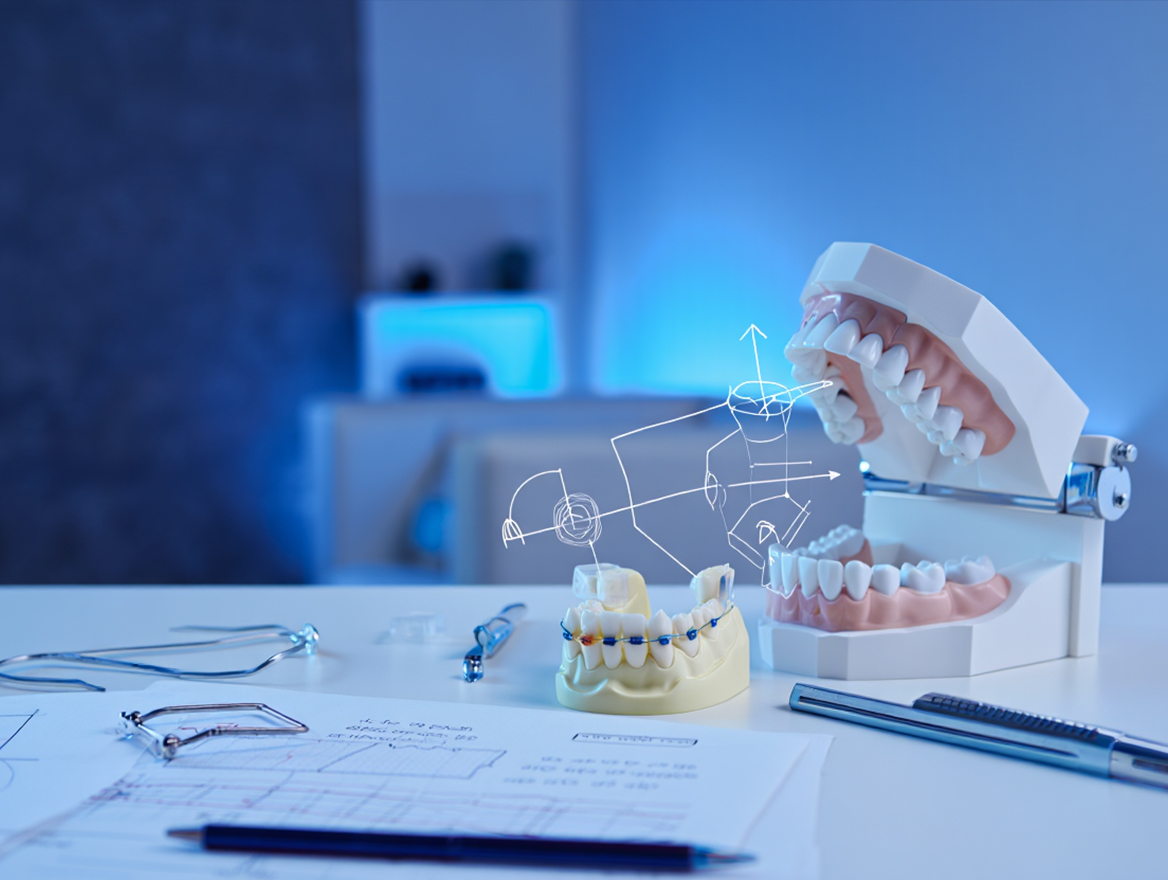
- Understand the relationship between force, moment, and centre of resistance and how these influence tooth movement
- Differentiate between various types of tooth movement, including tipping, bodily movement, rotation, intrusion, and extrusion
- Analyse how appliance design, archwires, and auxiliaries affect movement control
- Compare different mechanical systems and understand how to select appropriate approaches for different cases
- Understand the principles of anchorage control and its importance in treatment success
- Explore how to manage cases that require greater precision and stronger mechanical control
- Integrate biomechanical principles into diagnosis, treatment planning, and treatment sequencing
- Recognise common biomechanical errors and understand how they may lead to unwanted effects or complications
- Develop the ability to interpret what is happening clinically during treatment rather than relying on routine application alone
- Build a stronger scientific framework for discussing treatment decisions and understanding orthodontic movement at a deeper level
This course does not present biomechanics as an isolated theoretical subject. It positions it as an essential tool for understanding orthodontic treatment with greater accuracy, control, and intelligence within the British Fellowship in Orthodontics (FOrth) pathway.
Course Objectives
The Biomechanics Course is designed to build a clear scientific and applied understanding of the principles that govern orthodontic tooth movement. It aims to help trainees use biomechanical thinking correctly in the planning and management of different orthodontic cases.
It also transforms biomechanics from abstract theory into a practical decision-making tool that improves treatment accuracy and control.
The main objectives of this course are to:
- Provide trainees with a strong understanding of the fundamental and advanced principles of orthodontic biomechanics
- Explain how forces and moments affect tooth movement and surrounding tissues
- Help participants understand different types of tooth movement and the factors that control each one
- Develop the ability to analyse the mechanical systems used in orthodontic treatment
- Train trainees to relate appliance design and force systems to expected treatment outcomes
- Build a clear understanding of anchorage principles and methods of control during treatment
- Improve the clinician’s ability to select suitable mechanical approaches based on case requirements
- Strengthen analytical thinking when dealing with biomechanical challenges during treatment
- Reduce reliance on routine, non-analytical application and replace it with structured scientific understanding
- Prepare trainees for deeper understanding of complex cases, advanced treatment discussions, and specialist examinations
- Support progression toward higher clinical competence in FOrth orthodontic training through a more refined understanding of treatment mechanics
This course marks an important shift in orthodontic development, teaching trainees to think in terms of force, movement, and control rather than memorised steps alone.
- Category Orthodontics
- Learning Method Hybrid
- Course Level All Levels
- Duration 2 Month
- Lectures 2 Lecture
- Enrolled Students 0
Latest Courses


Related courses